The Dolce Vita Lifestyle

Raeleen D'Agostino Mautner, Ph.D.

I wrote my first book over 20 years ago. When it was published, it seemed everywhere I went people were not only interested in discussing the contents of my book, but also wanted me to coach them on how to write THEIR book. One woman told me she had wanted to write a book for the past 10 years, and please would I tell her what the “secret” was.

NEWS FLASH: there is no secret; just as there is no secret to losing weight. If you want to write a book, ultimately it comes down to the old Nike logo of “Just Do It”.

Everyone who has written a book knows that writing courses can be insightful, writer’s groups may offer motivation and camaraderie, and books on “how to write” can lay out the basics, but if you spend TOO much of your time attending courses, reading books on writing, and going to writers groups, you are robbing yourself of the time you need to write the book itself. Or procrastinating. Furthermore, the whole notion of “writer’s block” is another method of stalling, as it is premised on the misbelief that you have to wait for inspiration to strike before you can write.

There is no “Muse” that is going to descend on you and tell you what to write. So stop waiting for one, get rid of all excuses and distractions and make a commitment to yourself to WRITE!

Becoming an author doesn’t require a degree in literature, stimulating as that might be. It comes from the very mundane task of being willing to work hard, set aside time EVERY DAY to sit in a chair, and focus on typing out what you have outlined or planned.

The psychology of motivation, tells us that when we “chunk” large tasks into mini tasks, and then record our progress on paper, we actually get somewhere. Why? We can track our progress every time we reach a “mini-goal”, and seeing what we have accomplished thus far, motivates us to take the next step.

We can apply this technique to writing a book and I will share with you, a method that some of the most renowned authors use (e.g. Daniel H. Pink): It is called The Pomodoro Technique. Pomodoro is the Italian word for tomato.

What does a tomato have to do with writing a book? Back in the late 80s when Francesco Cirillo, the creator of the technique, was in university, he always felt like no matter how hard he worked, he was not doing well with his studying. A big part of that was lack of focus, motivation, and too many distractions. Today we have even more distractions and for would-be authors, with publishers telling them to grow their presence on social media and build their “platform”, get out there and do some speaking, added to the daily tasks of oh, I don’t know, keeping your home in order, working a full or part time job, caring for pets, children or grandchildren, getting our exercise in and the other gazillion things that pop up in our mental “to-do” list every day—somehow our writing dreams just fade into the background until they dry up.

Don’t let YOUR dream of becoming an author dry up!

Maybe you just want to write a book to leave as legacy to your children, grandchildren and generations to come with no particular desire to publish beyond making a few copies at the local printer. Or, you may want to finally write that novel from an idea you have had inside you for years but never acted upon, or started but never finished. Maybe you have a special expertise that you want to share with others by writing self-help or how to book.

Whether you want to write fiction or non-fiction START HERE:

  1. Be willing to TAKE ACTION. Know that reaching any goal requires sacrifice.
  2. Describe your book idea on paper.
  3. Examine the structure of other books in the same genre in which you plan to write your book. Take note of the length, number of chapters, theme progression, etc.
  4. Create a loose outline. Jot down at least a couple of sentences in outline form of what each chapter will contain.
  5. Do your research (even if writing fiction).
  6. Commit to a fixed, non-negotiable time EACH DAY in which you WRITE.
  7. Use a timer to stay focused and avoid interruptions.

The Pomodoro Technique was named for the tomato-shaped kitchen timer that Cirillo himself used to help him stay focused on his studying, and later on his professional work tasks. The technique helped him become successful in all areas of his life and has since helped many others. In a nutshell, here is an example of how it works, as applied to writing a book:

Goal: Writing a Book
Equipment: Kitchen Timer (shaped like a tomato or not); Paper, Pencil, and amount of time you will set aside EACH DAY for your task—in this case, of writing a book.
Time: Choose a non-negotiable block of time each day in which you will write.

  1. Choose the Task you will work on today: This task can be the outlining of your book, or the completion of 5-10 pages of a chapter, or doing the research needed for that chapter.
  2. Set your Timer (pomodoro or other kitchen timer or focus app) for 25 minutes.
  3. During this 25-minute time segment, block out all distractions. No Internet, no cellphone, no TV on in the background.
  4. Work straight through for 25 minutes, then when the timer rings put a check mark next to the title of that task (see below for example). Next comes a short break.
  5. Get up and stretch, walk around the house, get water, take a bathroom break, etc., for 3-5 minutes.
  6. Set the timer for another 25 minutes and get back to the task.
  7. Repeat the process. After each 25-minute segment, put another checkmark next to your task.
  8. After 4 pomodori (or checkmarks) take a longer break of 20-30 minutes. Go out for a walk, pop in an exercise video, prepare a salad, do whatever does not involve the task you are working on. This way you will clear your head and be able to get back to task until it is completed
  9. Set the Timer again in 25-minute segments and repeat the process until your task for that day is complete.

Make sure that you are realistic in setting your task(s) for the day. For example if you only have 1 hour a day to devote to writing, don’t set a goal of completing an entire chapter in that one hour. Self-motivation is about seeing yourself succeed at the mini tasks you set out. A bunch of completed sub-tasks will serve as reward and motivator to keep you going when you realize what you have already accomplished thus far.

General Example of The Pomodoro Technique as applied to writing a book:
Outline Book ✔✔✔✔ longer break ✔✔
Write Preface ✔✔✔✔ longer break ✔✔✔✔ longer break ✔✔✔
Research Chapter 1 ✔✔✔✔longer break✔

Now is the time. If you have always wanted to write a book, get going and share your creative insights and expertise by finally getting them on paper. You can do this, if you just take that first step and START!

References and Helpful Resources:
Cirillo, Francesco (2009, 2018) The Pomodoro Technique, LuLu & Currency Publishers)

Pomodoro Technique Website: https://francescocirillo.com/products/the-pomodoro-technique

Recommended Writing Books:
On Writing: A Memoir of the Craft by Stephen King https://www.amazon.com/Writing-Memoir-Craft-Stephen-King/dp/1982159375

How to Write a Book: A Book for Anyone Who Has Never Written a Book (But Wants To) by Lauren Bingham https://www.amazon.com/gp/product/B09LGND6PB/ref=ox_sc_act_title_1?smid=ATVPDKIKX0DER&psc=1

Get a “Pomodoro” Timer HERE
OR Get a pomodoro-like app for your smart phone (free):
• Pomodoro Focus Timer
• Focus Keeper-Time Management
• Pomodoro Timer
• Focus To-Do
• Focus Tomato

© Raeleen Mautner, Ph.D. 2023
How to pre-order my new book, 45 Ways to Live Like an Italian: Italian-Inspired Self Care Traditions for Everyday Happiness
Amazon:
Barnes and Noble:

Photo of Nilla Pizzi (credit: Associated Press)

For me and for many Italians, February is the month of song.  It is the month of the renowned Festival of San Remo, the yearly song competition in that officially began in 1951 in beautiful the coastal city of San Remo in the northwest Italy, known also for its extraordinary 19th century villas, lush tropical gardens, and celebratory flower parade for which it has been given the nickname “City of Flowers”. Acclaimed actress/singer Adionilla (aka Nilla) Pizzi stole hearts and took the winning spot at that first San Remo Festival, with the song “Grazie dei Fiori” (Thanks for the Flowers).  In her delivery, you could feel Pizzi’s heartfelt emotions, with which she thanks her ex-lover for sending her flowers, while at the same time acknowledging their final “good-bye”.  Her voice was rather soft, breathy, sensual, and genuine. The beauty of her vocal tone brought those written lyrics to life and resonated with so many of us who can relate to the bittersweet moments of the good-byes we are commonly faced with in our lives. 

 While Nilla eventually came to be praised by Italian president Giorgio Napolitano citing her “sensitive interpretations of Italian traditional melodic song”, there was a time when the singer was kept from doing radio work during the Fascist regime, because her voice was deemed to be too “sensual” and “exotic”.  

Our voice, whether singing or speaking, can be a powerful instrument of self-expression, which can be harnessed to spread joy and good cheer, or hostility and aggression. Our verbal tone can affect our mood and behavior, and the mood and behaviors of those who hear it. The tone and pattern of our voice can express calm or chaos, sweetness or bitterness, professionality or unpreparedness, confidence, or timidity. Some experts believe that the tone of our voice has a greater impact on others even more than does the content of what we are saying. 

Vocal tone, of course, can change over time, whether due to the physical changes that come with age, or the habits we fall into from the people and places that we most frequent. But the bottom line is: Vocal tone matters.  In classrooms, for instance, if the vocal tone of a teacher sounds controlling, it affects student’s well-being and their willingness to disclose information about themselves. Tone of voice can also determine how well a motivational speaker resonates with us, or how willing we are to follow the advice of and authority figure. Speaking in a professional confident tone improves our chances of being taken seriously in the workplace.  A parental firm, resonant tone of voice works better than a shaky timid tone when asking a kid to pick up their toys, yet a loud tone that slams the vocal cords can be intimidating and arouse fear, even when speaking to our pets. 

It is to our benefit to care for and even improve the tone of our voices with the proper physical care of the vocal folds, as well as attention to the volume, pitch, dynamics, and cadence when we sing or speak. In addition to personal appearance and poise, our voice is one of the most important dimensions of self-expression. I have counted on my voice to be an instrument that inspires, moves, and entertains audiences whether I’m doing radio, public speaking, acting, or singing.  Or just interacting with people on a daily basis.  I can’t afford to get hoarse, or to have my pitch and tone come across in a way that repels people, unless that is what I mean to do.

While I am not perfect at avoiding vocal issues now and then despite my efforts, here are some rules of thumb that help me stay in the game. Perhaps you might find some to be useful too.

  1. Record your voice occasionally, by reading a passage from a book; then either alone, or together with a trusted friend, write down your observations. Is your voice too low or high? Too raspy? Too much or too little volume? Tired or old or childish sounding?  Monotone?  Listen to speakers to whom you are most drawn and observe their vocal qualities. Perhaps you could hear a smile coming through in the lightness of their tone, or you like the way they distinctly pronounce their words. Then try making a few small changes and re-record your voice. Remind yourself to continue these changes and be aware of your voice each day until those improvements become second nature. 
  2. When you begin to lose phonation or sound in certain ranges of your voice, get to the root of it quickly. Do you lose your voice so frequently that an appointment should be made with an ENT physician to rule out nodes or nodules?  Or have you over-used your voice by talking loudly the night before in order to be heard over a noisy crowded event? If you are a singer, did you belt without proper breath support and compression? Is your laryngitis the result of post-nasal drip, a cold or flu or acid reflux? Talk to your doctor to get the best treatment plan to heal quickly.
  3. Stay hydrated by drinking plenty of room-temperature water and herbal teas throughout the day.
  4. Use a vaporizer at night if your home air is dry due to weather or winter heating.
  5. Use a singer’s steamer to steam swollen tired vocal cords.
  6. A healthy diet and some daily exercise—even a long brisk walk—does wonders for keeping the muscles and collagen of the vocal folds at their best.
  7. Before turning to lozenges, collagen supplements, throat sprays, etc., check with a voice professional to make sure they will help and not hinder your vocal recovery.

Nilla Pizzi once said that the secret to her success was that she chose to sing songs that brought on” good mood, happiness and maybe even some beautiful memories.” What a wonderful intention we can all share in by tending to our own precious voices—whether we sing or not. 

©Raeleen Mautner 2023

For Further Reading:

DeVore, Kate, & Cookman, Starr (2009) The Voice Book. Chicago Review Press.

Weinstein, N., Zougkou, K., & Paulmann, S. (2018). You ‘have’ to hear this: Using tone of voice to motivate others. Journal of Experimental Psychology: Human Perception and Performance, 44(6), 898–913. https://doi.org/10.1037/xhp0000502

Paulmann, S., & Weinstein, N. (2022). Teachers’ motivational prosody: A pre-registered experimental test of children’s reactions to tone of voice used by teachers. British Journal of Educational Psychology00, 1–16. https://doi.org/10.1111/bjep.12567

Obituary of Nilla Pizzi https://www.independent.co.uk/news/obituaries/nilla-pizzi-2269581.html

Good communication skills are important for us social beings. We talk to each other for information, mutual support, personal affirmation, and to share laughter and good feelings.  A positive conversation can affect the first impression we make on a potential new friend or on an interviewer at a job fair. And yes, first impressions do count. The verbal and nonverbal behaviors with which we present ourselves create a “primacy effect”. This basically means that the overall first impression we make -including our personal appearance, body language, level of information we reveal, etc.– has a more powerful and lasting influence over what someone new thinks of us, than is even gleaned from future encounters. Added to that is something called the “halo effect”; that is, if we make a positive first impression in one area, we are more likely to be thought of in a positive way in general.

When we were kids, we never worried about first impressions or even knew what they were.  Conversation was natural. Spontaneous. Our desire to connect was fueled by an innate curiosity and genuine interest. When someone new moved into the neighborhood, like the family from Poland who moved into the multi- family house next door with a daughter my age, there was no pre-planning on how to interact. We just happened to see each other playing in our respective backyards one day, and from across the fence we gave a casual wave and greeting before going back to doing whatever we were doing. No big deal. No losing sleep ruminating over whether the other liked us.  No second-guessing ourselves as to whether our greeting should have been longer, shorter, more in-depth or was it too premature.  Gradually our conversations got longer, eventually leading to exchanged phone numbers so we could continue our exchange after supper when it was too dark to play outside. On summer nights when our parents wouldn’t let us tie up the landlines, we just opened our third-floor windows and shouted across the alleyway to each other until we were told shut the widows and stop disturbing the neighbors! 

Unfortunately, as adults, many of us become less confident at the prospect of entering into a conversation with someone new for the first time. We worry about making a good first impression, and often go away believing that the other person liked us less than they actually did like us. Apparently, we don’t always have an accurate assessment of the impression we make on a new acquaintance. Studies show that when people are asked to rate how much others liked them after an interaction, then asked the other party how much the original person was liked there is a significant gap. In other words, most people like us more than we think they do!  Behavioral scientists call it the “liking gap”. Some attribute this to our feeling unsure of ourselves, awkward, or self-conscious. “Did I reveal too much about myself too soon, and seemed like a nutcase?” “Did I talk too much about my ex while on our first coffee date?”  “Should I have really rambled on about my political views?” “Did I come off as desperate by trying too hard to be liked?”

Sometimes conversational spontaneity is stilted due to fear of being negatively judged. Sometimes we hold back as a psychological defense or staying on our guard while trying to get a read on the other person’s reaction to us. Perhaps we fear coming off as boring or being rejected if we let our guard down, and we freeze or shy away altogether from conversations that can be important for our lives. Yet we can’t afford to freeze up during a job interview nor shy away from initiating conversations when we move into a new neighborhood and need to find connection and friendships.  

If the goal is to expand your network of rich, meaningful relationships as in a “dolce vita”, then upbeat conversations with new people can enrich your life immensely.  Here are a few ideas that might be useful:

How to close the liking gap

  1. Acquire the Skills. If you lack confidence in your communication skills, you’re not alone. Maybe you’ve spent most hours of your day behind a computer or phone screen by profession or by choice. When you know what to do the anxiety will fade. Skills like active listening, making eye contact, and picking up on verbal cues will give you more confidence in your own value as someone who is interesting and likeable.
  2. Keep Learning, and you will always have something interesting to say. Our lifelong journey of personal development comes about when we are open to growing as a result of new knowledge and experiences. Read books. Be open to hearing both sides of an argument. Attend lectures on topics you want to learn more about. 
  3. Believe in Yourself. Look back to times when you had effortless and interesting conversations with someone you just met, at the supermarket, over a cup of coffee on a blind date, or when a stranger needed help and you jumped right in without a trace of self-doubt.
  4. Be Courteous But Be Yourself. Don’t modify your behaviors and words according to what you think others will approve of or want to hear.  Be authentic, be more concerned with being interestED in the other person—and above all, be kind.
  5. Names are Important. Do what Dale Carnegie in his classic “How to Win Friends and Influence People” recommended. Remember a new acquaintance’s name and use it in conversation. This makes them feel important and can increase their positive evaluation of you. 
  6. Good Conversation Openers include  giving a sincere compliment, asking an opinion about a new restaurant, movie, etc;, or commenting on something non-controversial such as yes—the weather.
  7. Be Aware of Your Voice. Voice coach Roger Love believes that creating the sound of confidence in your voice can banish shyness and you will actually become more confident. Monotone is boring. Making the voice more melodic attracts interest.  Remove the verbal place-holders (um, like, if-you-will, etc.) and the uptalk (ending imperative sentences as a question). Also, monitor your volume so you are neither shouting nor speaking so softly it appears as a lack of self-confidence. 
  8. Remind Yourself of the Research on the Liking Gap, where we tend to think the other person does not like us as much as they actually do upon first impression. Relax, because chances are good that they DO like you. They really, really do (and so do I) 🙂

For Further Reading:

Society for Personality and Social Psychology. “Bridging the ‘liking-gap,’ researchers discuss awkwardness of conversations.” ScienceDaily. ScienceDaily, 8 February 2019. <www.sciencedaily.com/releases/2019/02/190208115331.htm>.

 Jiamin Li 1,2 Zhenchao Zhong1,2 Lei Mo1,2. Negative Deviation Effect in Interpersonal Communication: Why People Underestimate the Positivity of Impression They Left on Others  Psychology Research and Behavior Management 2020:13 733–745

Erica J. Boothby1, Gus Cooney2, Gillian M. Sandstrom3, and Margaret S. Clark4 (2018)The Liking Gap in Conversations: Do People Like Us More Than We Think? Psychological Science Vol. 29(11) 1742–1756

https://www.indeed.com/career-advice/career-development/improving-conversation-skills

©Raeleen Mautner, Ph.D. 2023

There is no denying that technology has become an important part of contemporary life. Almost everywhere I go people are snapping selfies or walking with their heads buried in their phone.  Our smartphones, tablets and computers have provided us with efficient ways to keep to our schedules, find answers to many of life’s “questions”, without thumbing through an encyclopedia, and video-chatting with faraway loved ones when we can’t arrange an in-person visit.  At some point, however, an over-attachment to our technology devices can morph into an addiction, causing withdrawal symptoms like stress, anxiety, and even sheer dread at the thought of being cut off from said connectivity.

 The term nomophobia is defined as an overwhelming, irrational, or overexaggerated fear (phobia) of being without one’s cell phone (NO- MObile-Phone phOBIA). And yes, it’s really a thing!

Let’s face it: We’ve all walked the technology-driven, obsessive-compulsive tightrope to varying degrees.  The panic that ensues when we leave home and realize we forgot our cellphone.  The anxiety that drives us to check and re-check for messages, especially when waiting for someone special in our lives whom we are hoping will call.  At the slightest vibration or buzz we rip through our purses or pockets to read and respond to Facebook, Instagram, or Twitter posts. Or we might be out with friends in the middle of a conversation when their phone rings and they leave us hanging while they chat with who-knows-who. I once had a weekly walking partner who frequently spent the entire walk “catching up” on her personal phone calls while walking along side me.  We can’t deny that we have become dependent on technology. We use our phones (tablets, computers) to find the best local pizza joint, the nearest gas station, or even give us directions to our destination.  We can barely resist the temptation to get lost in a quagmire of YouTube videos or ordering items we never realized we needed until fell down into the rabbit hole of endless online browsing.

Several years ago, the Italian government drafted a bill to fight nomophobia or technology addition out of concern that young people were living more in the virtual world, than in the real world. The Italian Association of Technological Dependance reported that half of young Italians aged 15-20 consult their cellphones AT LEAST 75 times per day.  Up to 81% of Italians ages 18-34 admit using their smartphones or tablets in bed.  The Italian Pediatric Society found that some parents use their smart phones to distract or quiet babies under 12 months old.

And just to be clear, Italy is not the only nation wrestling with the concern over increasing social and academic problems associated with nomophobia. It has become a global problem. Their proposal included an education component for parents to be able to identify issues, and trainings in schools and universities that included a mindful, more conscientious use of the Internet and social media platforms.

While we love the benefits of technology the dark side of over-attachment leads to lowered—not increased—quality of life. Some examples:

  • Voice contact has increasingly given way to texting. Several years ago, a Yale student was texting and walked right into a Shuttle, prompting the university to post “stop texting” signs throughout the campus.
  • 12% of motor vehicle accidents are reportedly due to cellphone distraction
  • A Rutgers study found that final exam grades were shown to be lower because of divided attention involving devices.
  • Nomophobia (fear of being separated from the use of one’s phone) has been observed to lower employee performance and productivity.
  • Over-attachment to cellphones can lead to insomnia as well as eventual loneliness.

If you feel that you are negatively affected by constant attachment to your devices, here are some ideas. The goal is to limitnot eliminate technology, so we can maximize the benefits of connectivity that enrich our lives, while refusing to let inanimate devices and virtual worlds take control of them.:

  • Shut off or silence your phone during certain time-limited events, such as mealtimes, during worship services, lectures, concerts, etc.). Put the device where it is not easily accessed, so you won’t be tempted. You might want to make this a standing rule for your own kids, grandkids, and guests whom you invite to dinner or to accompany you to an event.
  • Go for a walk without using your cellphone; without blocking out the beautiful sounds and sights of nature with earbuds. Notice the birds singing, the leaves rustling, the blazing sunset coloring the sky with shades of amber, pink, and purple. 
  • When you go out with friends, ask if they agree that to enjoy everyone’s company you will all silence phones, and use only in case of emergency.
  • Carve out an hour each day to read, or work on a project you never quite get to because of spending too much time on social media
  • Go an entire week without posting a selfie 
  • Live your life in real time with the people you care about. For example, instead of wishing your spouse, children, or best friends a Happy Birthday online—tell them directly, make them a cake, give them a hug that no virtual post can do.
  • Seek professional help if you need it.  Cognitive behavioral therapy is effective, and there are even certain prescribed medications used for treating anxiety or specific phobias.

The adage “too much of a good thing” applies here. Technology serves us when it adds, not detracts, from the enjoyment of our life. And that requires a conscious effort to balance our involvement with the virtual world, at the expense of real time living.

© Raeleen Mautner, Ph.D. 2023.

For Further Reading:

TheLocal.IT “Italian Government Unveils Plan to Tackle Smartphone Addiction” https://www.thelocal.it/20190722/italian-government-unveils-plan-to-tackle-smartphone-addiction/

Bhattacharya S, Bashar MA, Srivastava A, Singh A. NOMOPHOBIA: NO MObile PHone PhoBIA. J Family Med Prim Care. 2019 Apr;8(4):1297-1300. doi: 10.4103/jfmpc.jfmpc_71_19. PMID: 31143710; PMCID: PMC6510111.

Anshika Arora, Pinaki Chakraborty (2020). Diagnosis, prevalence, and effects of nomophobia – A review. Psychiatry Research.

Bragazzi NL, Re TS, Zerbetto R (2019).  The Relationship Between Nomophobia and Maladaptive Coping Styles in a Sample of Italian Young Adults: Insights and Implications From a Cross-Sectional Study.   JMIR Ment Health2019;6(4):e13154URL: http://mental.jmir.org/2019/4/e13154/ doi: 10.2196/13154 PMID: 30763254

Giuseppe Marletta1,2, Serena Trani2, Giulia Rotolo3, Maria Carmela Di Monte2, Leopoldo Sarli1, Giovanna Artioli4, Pasquale La Torre1, Giuseppe Pedrazzi1 (2021). Nomophobia in healthcare: an observational study between nurses and students Acta Biomed 2021; Vol. 92, Supplement 2: e2021031 DOI: 10.23750/abm.v92iS2.11505

Friendship is treasured in the Italian culture (chi trova un amico/a trova un tesoro), and while having friends is important for our well-being, surveys show, that for Italians, perhaps an even more powerful factor in overall happiness is the having a single confidant. A confidant is someone with whom we feel safe in sharing our deepest hopes and dreams, as well as our personal secrets.  This kind of relationship is a two-way street. Ideally, the trust, empathy and respect are reciprocal, unless we are talking about a client-therapist dynamic. 

            Humanist psychologist Carl Rogers developed the concept of unconditional positive regard, which implies a non-judgmental acceptance, empathy, and support of another human being. He based his person-centered therapy approach on the premise that when a person feels truly heard and understood, that person begins to thrive. Outside of the therapeutic setting this phenomenon resembles the makings of a confidant relationship.

            We don’t require a great number of confidants. In fact, having even just one person who empathizes with us on a deeper—not just surface—level, and supports our hopes and dreams, has been shown to increase our well-being.

Close relationships are associated with better overall health, less chronic medical problems such as heart disease, hypertension, and asthma, and less anxiety and depression. 

According to a table recently published by Statista Research Department, over 80% of Italians say they have someone they can count on. An article in Europe’s Journal of Psychology showed an even greater percentage of Italians who report having a special person in their life to confide in and to count on.

Most Italians report their confidant as being either their spouse/partner or a member of their nuclear family, as opposed to choosing someone outside the family. The data also show Italians tend to have frequent conversations with their person, usually live in close proximity, and females were only slightly more likely to have a confidant than males. Trust and honesty were shown to be qualities even more important than the actual depth of interpersonal sharing.

Oops, Wrong “Confidant”

Let’s face it–we all at one time or another have offered our trust and self-disclosure to someone whom we later discovered has betrayed our confidence. This person may have repeated our personal story to others. They may have suddenly ghosted us when we thought we were getting close to them. They may have been a bit too quick to believe negative gossip about us, or simply started that gossip about us behind our backs. This can happen when a relationship is still relatively new, as in the case of a developingromantic relationship, especially when the person you are involved with is what my beloved colleague, author Martin Kantor MD described as the “psychopath of everyday life” (the non-criminal kind). Such a person is often hard to detect, even for those familiar with the classic associated characteristics. They may have charmed their way into your life, gained your trust, then after getting what they could get from you, will suddenly flip the emotional switch of abandonment so quickly it will make your head spin. If this has happened to you just know it is not your fault for being loving and trusting. Consider that life continually presents us with lessons if we are willing to learn them. Do not trust too quickly or blindly. Trust is something that is earned, and a person earns your trust when you have had enough time to understand their values and experience their attitudes and behaviors across many situations. Give a new relationship the time it needs to grow. Exchanging confidences gradually will give you a sense of a potential confidant’s character, capacity for empathy, altruism, and conscience. 

How to Develop (or maintain) a True Confidant Relationship

In the Italian studies we note that most respondents pointed to their significant other as their confidant. But as we grow older, we may have lost our life partner. We may lose friends to death, relocation, an unresolved argument, or simply growing apart due to our life situations, the different paths or divergent interests we pursue.  If this resonates with you, here are some ways to develop the rewarding and life-affirming dynamic of a confidant relationship. It may be useful even to expand your “good friend” circle. 

  1. Take a Three-Column Inventory. On a sheet of paper, column 1 is a list of your closest relationships. This will probably be the shortest of the three lists and will likely include a spouse or partner if you have one, one or more close relatives, and your very closest friends. Column 2 will be your “good friends” column. This might include friends you have kept in contact with over years, friendships you have developed in the workplace and carried into your non-working life, etc. Column 3 will have non-close friends, new friendships and acquaintances you might like to get to know better.
  2. Proximity.  Of your lists, circle the people in your life that live within a short enough distance to enable you to get together with regular frequency.  While long -distance relationships can and often do work, there is a different level of closeness that comes with doing activities together, seeing each other face to face while having a heart-to-heart talk, and holding someone’s hand (or having them hold yours) when life’s challenges seem overwhelming.
  3. Maintain Regular Contact. Years ago, “Thinking of You” greeting cards were much more popular than they are today, yet we can’t deny that getting a reminder that someone cares enough to keep you in their thoughts gives life and energy to a reciprocal relationship.  While we typically don’t send paper cards anymore, we do have so many electronic tools at our disposal (text, email, phone apps, etc.) that communicating is easier than ever. The idea is to use these tools as a vehicle to make plans to get together in person.

References:

Statista (2023) Share of Italians having someone they can count on from 2018 to 2020 https://www.statista.com/statistics/1262695/share-of-italians-having-people-they-can-count-on/

Isaacs, J., Soglian, F., & Hoffman, E. (2015). Confidant Relations in Italy. Europe’s Journal of Psychology (1841-0413).

Kantor, Martin (2006). The Psychopathy of Everyday Life. Westport: Praeger.

I believe in self-help; in accepting responsibility for our ongoing personal development. As human beings with endless potential, we should never stop learning and growing, and becoming the best version of ourselves that we can be. The humanist psychologists, such as Abraham Maslow, espoused the process of self-actualization, or directing the progression of our lives toward realizing our fullest talents and potential.  Let me start here.

People make New Year’s Resolutions often because they feel they have f*#cked up and disappointed themselves in some way during the previous year.  But consider that each year as a classroom of your life, with several lessons that you aced, and a number of lessons that you-I-we all—need to put more effort into until we get them right. And we do have the ability to get them right. We need only look back to our past “successes”, to the times when we felt proud of an accomplishment we achieved, for the gratitude we received for having helped someone, or for having survived a most difficult, even traumatic challenge that life hurled at us. 

This year, regardless of whether you plotted out specific New Year’s resolutions, I want you to now plot out your past personal triumphs. Doing this invites what Albert Bandura called self-efficacy or a belief in your ability to succeed in the tasks you now wish to accomplish.  Read through your list of personal triumphs often and let them inspire you, and give you the confidence and motivation to achieve the goals that are rooted in your personal values and priorities.

Beyond that, I would like to share what I often turn to for additional inspiration—the ancient wisdom of the ages. Ancient Roman and Ancient Greek philosophies produced two major perspectives; both of which have important implications for contemporary living and can be useful for us to be aware of. Epicurean philosophy espouses the value of focusing on everyday pleasures in order to live tranquilly; and Stoicism embraces living in harmony with reality.

Both of these perspectives make sense. When we are feeling bad about something, often just switching our focus onto what makes us happy, can turn our mood around and give us joy. But on the same token, realizing that we cannot control or deny certain things that bring us pain, it is important to recognize the value in facing life’s battles with courage and resilience. We must make changes where we can (either to a situation or to our reaction to that situation), and also, whenever we can, refocus our energy on the daily gifts that each day bestows on us. Simple moments of potential happiness often go unnoticed. 

Now to what I promised: Here are a few pearls of ancient wisdom that inspire me, with hopes that sharing them might also be useful for you.

 HAPPY NEW YEAR, Dear Friends. May you have a most amazing 2023

The Wisdom of Marcus Aurelius (From Meditations)

  • Every moment think steadily as a Roman(…)do what thou hast in hand with perfect and simple dignity and feeling of affection and freedom and justice and to give thyself relief from all other thoughts.
  • Take away thy opinion and then there is taken away the complaining, for example: Take away the complaint “I have been harmed,” and the harm is taken away.

The Wisdom of Marcus Tullius Cicero (On How to Grow Old)

  • Old age, far from being feeble and sluggish, can be very active, always doing and engaged in something..
  • Never stop learning

The Wisdom of Horace (How to Be Content)

  • Strive for “ataraxia”(freedom from disturbance), for example escaping daily pressures of a busy life by experiencing the tranquility of nature 
  • “Life’s small sum forbids us to start up long hopes”. Don’t ignore the gifts inherent in today. 

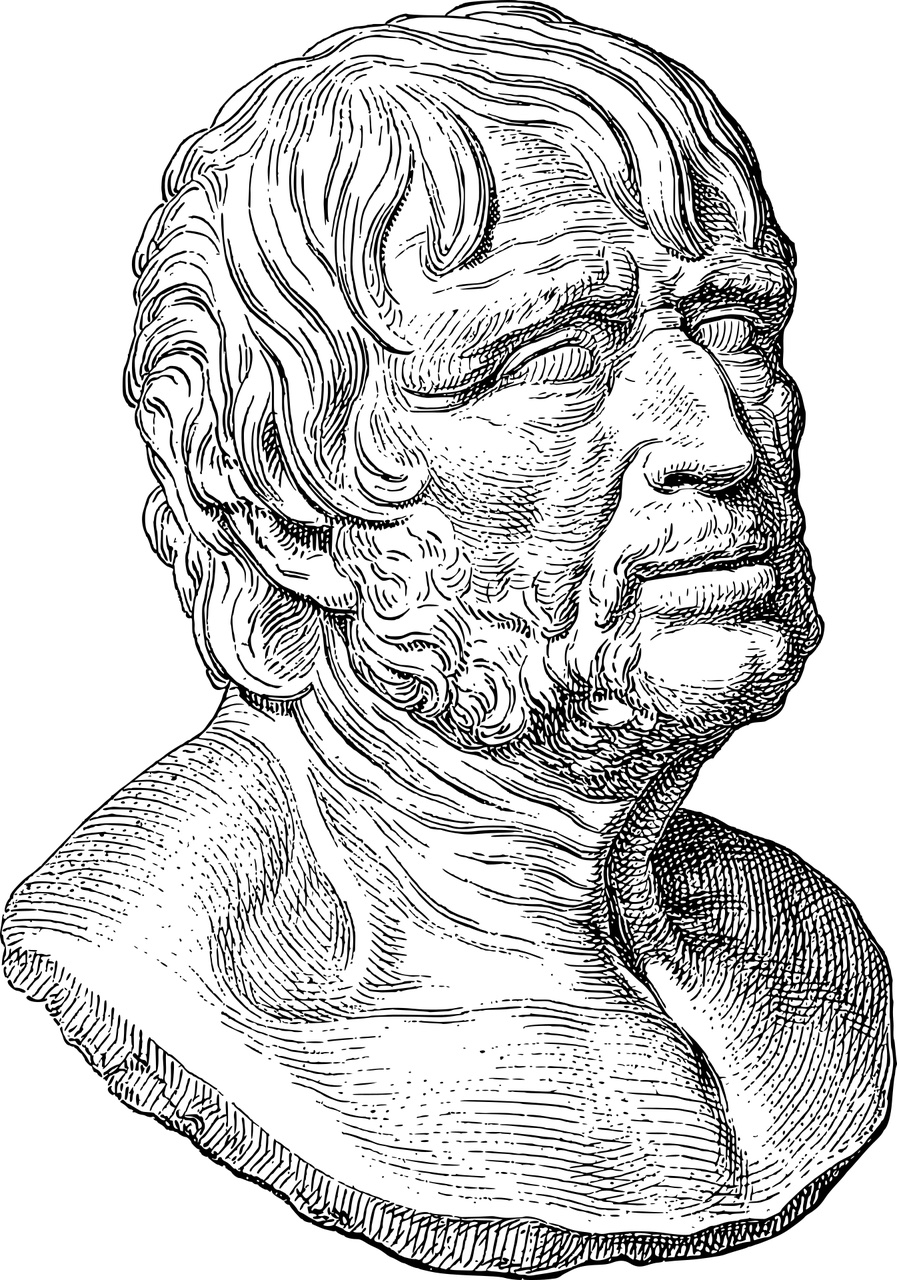
The Wisdom of Seneca (Life is Long if You Know How to Use It)

  • The greatest obstacle to living is expectancy, which hangs upon tomorrow and loses today. 
  • Every individual can make himself happy

The Wisdom of Leonardo (The Notebooks)

  • Those who are in love with practice without knowledge are like the sailor who gets into a ship without a rudder or compass..)
  • Obstacles cannot crush me. Every obstacle yields to stern resolve.

©Raeleen D’Agostino Mautner, Ph.D. 2023

Categories: Mind

America recently fell in love with the record-breaking Jeopardy champion, Amy Schneider, the first transgender woman to compete—and win over a million dollars– on the game show. Despite the nasty transphobic social media snipes, Amy handled them with grace and a sense of humor—a reaction, no doubt born from a solid sense of self-worth.  I was fascinated by her intelligence, her gracious demeanor–even when she got an answer wrong—and most of all, by her self-confidence. All of these attributes are likely byproducts that stem a love of KNOWLEDGE.

At one point when Ken Jennings asked how she got to be so smart, to which Ms. Schneider explained how her mother instilled a curiosity for knowledge in her. When they would be working on spelling words, for example, the goal was not just to figure out the correct spelling, but to also explore the origin of the words, and other associations with that word.

I used to think that the idea of “love yourself first if you want to be loved” was an overused, cliché.  That is, until I recently came across the ideas of Dr. Leo Buscaglia, a professor/author who used to be referred to as “The Love Doctor”, because he was so passionate about the subject of love—and not just romantic love; far from it. Dr. Buscaglia explained why continually working on personal development gives us the capacity to love who we are and be able then to offer our best selves to others whom we love. That could me our partners, family members, friends and so forth. One of the most important ways to develop (i.e. love) ourselves, he believed—was to continually increase our knowledge base.  Leo told a story about his Italian father, who would not let him go to bed each night, until he told about something new he had learned that day. If he had forgotten to learn something earlier, he would head straight to the encyclopedia, so that he would be ready when his father questioned him!

Knowledgeable enriches our lives in several ways. It makes us more competent and more successful when we acquire the knowledge we need to achieve our goals. Smart people –in whatever the subject area–are perceived as attractive, sexy, interesting, and ageless. We respect and admire those who can analyze both sides of an argument without being close-minded, are able to converse about intriguing topics, and carry themselves with an understated confidence, knowing there is nothing to prove, nor a need to seek approval.  Being knowledgeable gives vibrancy and depth to our personality, and just makes us feel better about who we are.  

In order to attract people with these qualities into our lives, Dr. Buscaglia had it right—we have to BE a person who has these qualities to offer in exchange.

There are so many ways to learn new things.  Here are some of my favorites:

  • Read books and articles written in different time periods. Many are free to read on the Library of Congress website.
  • Watch documentaries. You can learn about different geographical areas, about history, about famous people, or even how to improve your health
  • Learn a new language.  You subscribe to online programs, watch free YouTube videos or even sign up for an Adult Education class in your district.
  • Teach yourself how to play an instrument. There are so many great resources for this—from books, to videos, to online programs. Just make sure you stick with it long enough to gain the satisfaction that comes with real competence. 
  • Look up words that you don’t understand Don’t just read past words you don’t understand. You can google the word, use dictionary.com or even get a dictionary app for your phone. 
  • Focus on the skills or information you need to achieve your most important goals. Often we have dream but we let it die out because we think we don’t have the skills or the knowledge to achieve it. Of course the goal should be reasonably achievable. From there, find a way to acquire that skillset and make a step-by-step plan to take it to fruition.
  • Read up on something you thought you would have no interest in.  You’d be surprised how pursuing unfamiliar information opens doors of enlightenment to additional areas which you never would have learned about otherwise. You will be fascinated!

What new knowledge have you gained today? Leave your comments; I would love to read them! 

BONUS READING: As many of you know, I have been writing a weekly column (in English) for l’idea magazine (I know you will enjoy reading my articles. You can find HERE. In my article this week I gathered up some interesting Italian advice on –what else—AMORE, which I hope you will enjoy!

We all want to believe there is a magical force out in the universe somewhere that responds to the promise that you can imagine whatever you want and by believing you already have it, it will suddenly appear.

The ideas behind “Law of Attraction” books have been capturing readers’ attention as far back as 1877.  The reality, however, is that this kind of “New Thought” spirituality is considered to be pseudoscience—a collection of beliefs mistakenly regarded as having roots in the scientific method or research. Scientific research is based on reviewing the extant literature on a topic, coming up with a question to take previous research to the next step, forming an educated hypothesis (assumption), then testing that hypothesis using a certain methodology, running an analysis then forming a conclusion to be published in a scientific journal. After a thorough search of the scientific literature, I could not find any such studies that provide evidence for the tenets of the Law of Attraction, no matter how appealing that because thoughts are particles of energy, the universe “draws to you” a match for that energy.

I am not opposed to the power of positive thinking. There are many books written about how our thinking influences behavior, and essentially forms who we become.   I can’t argue with that premise. Happy thoughts make us smile, sad thoughts make us cry, artistic thinking spurs us on to materialize our creative ideas, goal-oriented thoughts provide the fuel we need to start businesses or progress in our careers. 

Productive thoughts are indeed the seeds from which a productive life blooms. But to simply think that you can repeat affirmations all day long and presto, your dream date shows up, a bucket of money materializes, and you will lose 50 pounds by the time you wake up next morning is insulting to your intellectual integrity and threatens your power to reason.

It is easier for us to latch on to an intuitive fantasy than face the reality that we actually need to follow thoughts and ideas with powerful productive action. The truth is; the dream date doesn’t just show up at your front door, the bucket of money doesn’t rain down from the clouds as you’re out for a stroll, and losing weight requires less fantasy and more consistency in eating better and moving more throughout the day. You can “act as if” you already have whatever you desire, but that doesn’t mean it will be forthcoming. On the other hand, you can outsmart the peddlers of pie-in-the-sky promises, by doing what really does work to help you achieve your goals:

  1. Be clear and realistic about what you want.
  2. Plan out how to achieve that goal in small steps.
  3. Think of ways to keep yourself motivated as you conquer each step.
  4. Revise as necessary.

There you have it. I hope that throughout this fresh new year of 2022, you will stay positive, believe in yourself, and have confidence in your ability to achieve your goals by starting with a thought and following up with a plan of action.  You will likely realize that is the more certain way to “manifest” the life you wish to create. 

Happy New Year to all of my readers and followers. I hope you will take a moment to visit my weekly column for L’idea Magazine—I know you will resonate with many of the articles you will find there!

Further Reading:

Boudry, M, Blancke, S, Pugliucci, M. (2015). What makes weird beliefs thrive? The epidemiology of pseudoscience. Philosophical Psychology vol 28(8). 

Sketch by Giuseppe DeFilippo

The other day, I was out walking my dog when a memory from long ago resurfaced. It was as if the universe was sending me an important reminder; like two hands being placed on my shoulders. 

When I started grade school, I was one of the two tallest students in the lower grades, and thus I would constantly be slumping my shoulders to look more like everyone else. Occasionally, one of the nuns would take my shoulders in her hands and “help” me to pull them back and stand upright. At the time I wasn’t too happy about this (as if anyone would be), but to avoid the reminders to stand up straight, I quickly learned to reverse my habit of slumping, and started walking with my head and spine aligned, as if an imaginary string ran from the top of my head to the clouds in the sky. To my surprise, whenever I walked like this, I felt more confident, more graceful– and even more cheerful! Could it be?

The body of research on the influence of facial expressions on emotion dates back to Charles Darwin in 1872. In fact, a few studies have found that when facial frowning is controlled for, as with a Botox injection, depression may even be lessened.

But what about posture? Might there really have been something to what I noticed when I stood up straighter back in grammar school? A study out of the University of Auckland examined this very question. If muscles in the face can affect one’s emotions, what about our posture muscles? They measured the affective and cardiovascular responses of 74 participants who were randomly assigned to either a seated upright or seated slumped position and given a psychological stress task. The result was that participants who completed the task sitting upright reported better mood, higher self-esteem and less negative stress as compared to those who completed the same task while sitting slumped.

Reminding ourselves to “straighten up” when seated, standing, or walking is such a simple and natural way to possibly feel more upbeat, that I hope you will agree it’s worth a try for at least one entire day. Then see if it makes a difference in your mood. 

Finally, no matter what your height or physical characteristics, I hope you will hold your head up high and always be proud to be exactly who you are! 

Bonus Read: Need more holiday cheer? Check out my latest column for L’Idea Magazine

© Raeleen Mautner, Ph.D., LLC 2021

References:

Darwin C.  The expression of emotions in man and animals. London: Murray; 1872

Nair, S., Sagar, M., Sollers III, J., Consedine, N., & Broadbent, E. (2015). Do slumped an upright postures affect stress responses? A randomized trial.  Health Psychology, v.34 (6) 632-641.

NB: All self-help articles on this website are for informational purposes only and are in no way a substitute for professional help when needed.

Holiday season brings forth the gambit of emotions—from sadness to elation an everything in between. Together with the blessings we are grateful for, we also face challenges with each year that goes by. Added to the recent mix is the pandemic-related adversity of loss, isolation, and prolonged stress reported by more than 80% of Americans. 

While the tips below focus on self-help, I always encourage my readers to seek professional mental health counseling when needed. 

Here are three simple tips you can try that might just help you to feel happier during this holiday season and beyond.

  1. Find the blessings that spring forth from your challenges.  I loved one of the quotes in best-selling novelist Walter Mosley’s books (Debbie Doesn’t Do It Anymore): “I’m sorry that he’s dead, but I am happier by far that he lived.”  Always look at the gifts that arise despite adversity.
  2. Volunteering will elevate your spirits and will give your life purpose.  Chose any organization that resonates with your skills and interests: Habitat for Humanity, Volunteering for the blind, walking dogs at a local shelter, reading to children in the cancer ward of the children’s hospital, wheeling nursing home patients into the sunshine as you sit and listen to their stories. There are so many ways you can feel useful and important. Restore that feeling of joy by doing something positive for others.  
  3. Put yourself on a “savoring diet.” Learn to strengthen your resilience muscle by training yourself to savor every positive experience you encounter. This will allow good feelings to bubble up to the surface and create an arsenal of emotional strength that will get you through potential tougher times. The more you get into the habit of focusing on the good things in your life, the easier it will be to face challenges whenever they arise, because you know you have the ability to return to a good and happy existence again.

And finally, don’t forget to allow yourself moments of fun and laughter, which truly are the best antidotes to cure all ills—emotional and physical.

©Raeleen Mautner, Ph.D., LLC 2021

FIND BONUS READS on L’Idea Magazine