The Dolce Vita Lifestyle

Raeleen D'Agostino Mautner, Ph.D.

In his treatise on “How to Grow Old”, Roman Philosopher Marcus Tullius Cicero expressed how useless it is to complain about growing old, because “Fighting against Nature is as pointless as the battles of the giants against the gods.”  Yet, despite such a seemingly defeatist attitude, Cicero was anything but depressed about his advancing age. In fact, he was one of the first crusaders against ageist stereotyping, and encouraged people to defend their age, and hold their heads high. 

Cicero wholeheartedly believed that the joys experienced in the older stages of life are unique, and just as rewarding—albeit different– as the joys that are specific to babies, children, and young adults.  So why don’t most people associate aging with happiness? Perhaps because of the common fears associated with growing old; which are evident in those who constantly worry about their age.

According to Cicero, there are 4 age-related fears:

  1. We fear aging takes us away from an active life.
  2. We fear aging weakens the body
  3. We fear aging deprives us of sensual pleasures
  4. We fear aging because we fear getting closer to death.

All of the above, he believed, could be debunked.

First, plenty of older adults live active, vibrant lives well into their 60’s, 70’s and beyond.  We may not seek out the same activities we did when we were 25, but why would we? Says Cicero: When you get older, “it is not by strength or speed, or swiftness of body” that we involve ourselves, but rather, activities that require ‘wisdom, character, and sober judgment”. I might have loved the exhilaration of diving when I was a kid at the beach, but today I much prefer a more relaxing (and less-risky) swim. Or a trip to the museum, or the art gallery—things I wasn’t particularly interested in when I was younger. 

Second, while our level of strength changes throughout the years, we can still use the strengths we have, without feeling we have “lost” anything.  “I don’t long for the strength of youth…any more than when I was a young man I desired the strength of a bull or an elephant.” The message is to accept the nature of who we are, because only then can we live happy. At each stage of life, we have exactly what we need and we must preserve the health we have through moderate exercise and “self-control” when it come stop eating.  The timeless formula that still works. 

Third, to say older adults are deprived of sensual pleasures couldn’t be more false. If we are talking about love and romance, well many older adults are out there dating and having fun, perhaps with a bit more wisdom and less euphoria than years ago. Or perhaps instead they have opted to direct their energies towards hobbies and activities that don’t involve romance at all.  Cicero, for instance, was enamored with agriculture and wrote extensively about the joys of every aspect of planting and the satisfaction of harvesting. The bottom line? All roads lead to Rome; many roads lead to happiness.

Finally, Cicero reassures us there is no reason to fear death, for at the end our lives, there will either be no consciousness at all, or eternal bliss. Personally he believed in the second option. And so do I.

Question: Do YOU fear growing old? If so, does the wisdom of Cicero help you to see the potential for aging happy? I’d love it  if you would “like” and share this article if  you have a moment. And as always I value your comments and your feedback!

© Raeleen Mautner, Ph.D. 2021

Reference

 Cicero, Marcus Tullius (translation by Philip Freeman, 2016). How to Grow Old: Ancient Wisdom for the Second Half of Life.
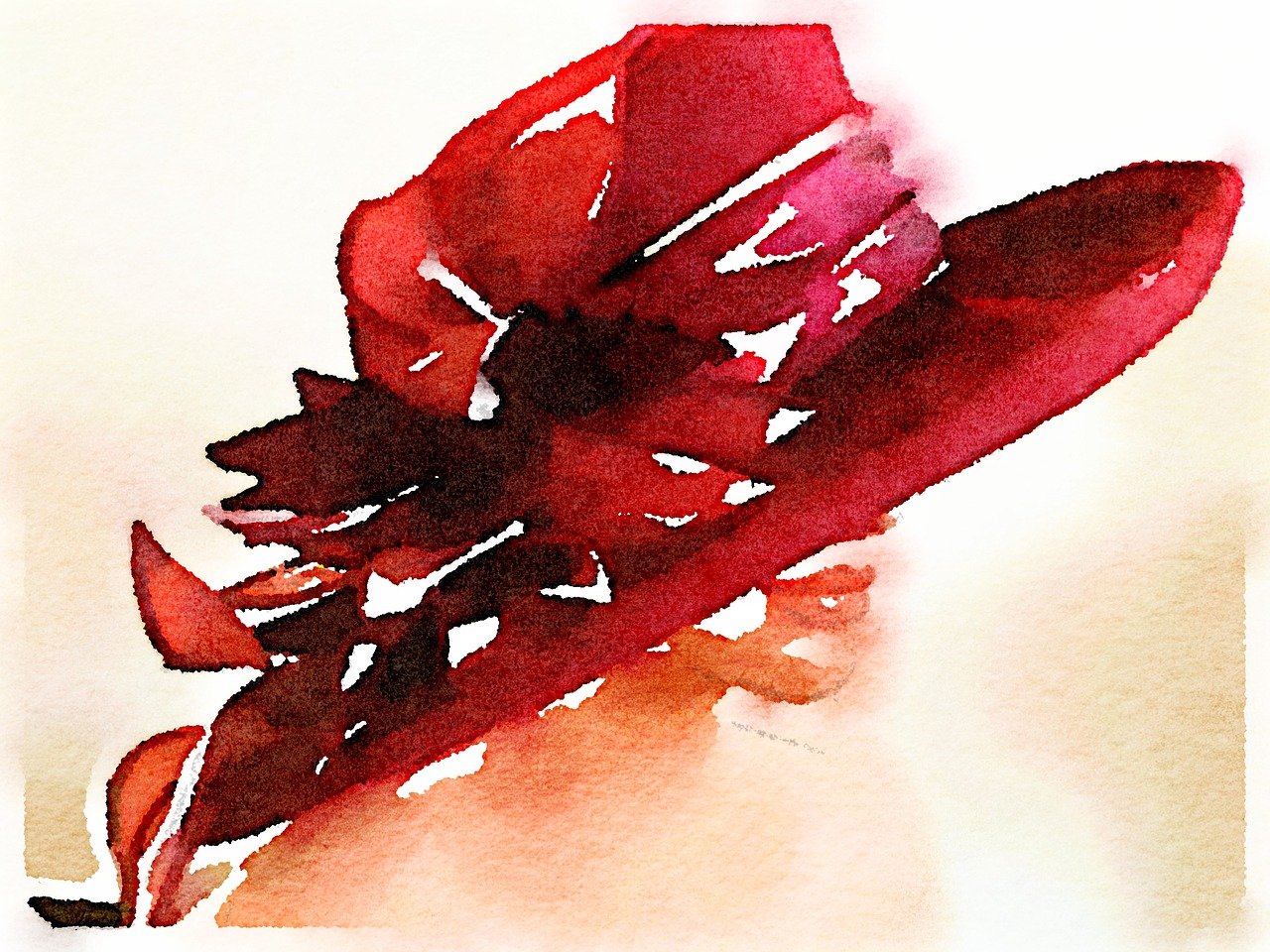
Did you know that research has shown an association between playfulness and resilience in older women? Furthermore, the more often we take time to just have fun, the stronger and stronger our resiliency skills become.

     Researchers investigated this phenomenon in 167 women over 50 who participated in the Red Hat Society (RHS), which is a leisure group for older women. They gave them a survey that measured playfulness through leisure activities, such as the activities that RHS members often participated in. They controlled for (i.e. cancelled out) the effects of age, education, marital status, years of RHS membership, and physical and mental health statuses. Results showed that playfulness contributed to the growth of resilience in older women over time.

     Sometimes we seem to carry the weight of the world on our shoulders. The horrors we witness through the nightly news; the personal traumas that we or the people we care about are facing, the losses that grow in number alongside our years. These situations are real, and in many cases frightening—BUT—we need to break away every once in a while to restore balance and calm in our life. Skip a night of news. Put the technique of “Stop Thought” into action and replace negative thoughts with happy ones, whenever you catch yourself feeling stressed. Most of all—we need to take more play-breaks. Here are some suggestions:

  • Call for a get-together with old friends or new. Instead of sitting at a table eating and drinking for hours (although that is fun too) go play a game of mini-golf, pickle ball or tennis, take a flamenco class together, go bowling or play volleyball, basketball, badminton—just move and have a ton of laughs!
  • Play with your dog. Teach it to fetch a ball, hide and seek the treat—or YOU. Believe me, Fido will be up to the task any time of day or night.
  • Go out dancing. Nowadays there are no hard and fast rules that you must only dance when you have a partner. Many a time, I have just gotten lost amongst a dance floor crowd and danced the night way solo—and had a blast doing so.
  • Have a game night with friends or family. I have never played “Left Right Center” but hear that many a circle of friends are enjoying that dice game.  I personally favor Monopoly and will stop at nothing to obtain Broadway and Park Place!
  • Get silly with your grandkids. Have sleepovers, camp outs, put on a musical together or teach them how to play bocce in your backyard.

Playing seems to strengthen our emotional muscles for getting through the tougher times. So make time for fun as you would for exercise or meditation. It is that important, especially in this tract of our lives.  What do YOU like to do for fun? Comment below and let us know! And don’t forget to share this website with those you know could use a lift.

Reference:

Chang, P; Yarnal,C; & Chick, G (2016). The longitudinal association between playfulness and resilience in older women engaged in the Red Hat Society. Journal of Leisure Research (48) pp 210-227.

  1. Take notes on your life. Leonardo da Vinci not only left us the gift of insight into his genius through his notebooks, but he developed his own intellectual, scientific, and artistic skills by writing down everything that came to mind. He started in his 30’s and unfortunately most of what he wrote has disappeared. What remains shows architectural drawings, practical military designs, memos, sketches, personal notes, and a developing philosophy of the world through simple observation, the basis of our scientific method today.. 
  2. Be curious about everything you observe
  3.  Diversify Your Interests.  Leonardo’s notebooks provide evidence in his interest in drawing , painting, sculpture, anatomy, optics, engineering, astronomy and more. In our short lifetime most of us tend to narrow our fields of learning. Charles Krauthammer, a political commentator and Pulitzer prize winning writer, attributes his great accomplishments (and their were many, not the least of which was his father’s advice to “learn everything” he could. It served him well. 
  4. Learn reality from nature. Leonardo unlike many of his illustrious contemporaries, did not have the luxury of a formal education. No one can refute his genius, however.  From the time he began to explore the countryside as a little boy, his love of nature taught him how to look scientifically and objectively a the world around him.  We spend the majority of our time indoors. We go from home to work, back to home or to indoor meetings and events. Make it a point to step out more into the outdoors.
  5. Develop Skills that will both help others and yourself. . When Leonardo wrote a letter to the  ruler of Milano seeking employment he promoted his skills in the order in which they would be most useful in that zeitgeist, starting with his military engineer capabilities. Many college students are misguided in taking courses that upon graduation will leave them with mountains of debt and no employable skills that would help pay back that debt. 
  6. Think for yourself. It was no secret that Leonardo was not able to read latin, and therefore, despite his efforts to teach himself the language that all men of letters and science used, his was a struggle. He reasoned that “experience” was even more important in bringing about wisdom. 
  7. Emulate the Masters. We might call it apprenticeship, a process that has been all but lost over the centuries. Leonardo advised young painters to first learn perspective, then proportions, then copy from a good master.

Raelen Mautner Ph.D.

According to the Pew Research Center there are 71.6 million baby boomers (those born between 1946 and 1964) in the United States.Ageism is only one of elements we have to resist as we grow older. If you thought adolescence, young adulthood or trying to be a good parent was tough, just consider some of the “joys” older we must come to terms with as we get up there in years– not the least of which is social and professional “invisibility”. Many face the adversities of losing numerous loved ones, body image issues, health challenges, financial difficulties, and dwindling social lives.  Fortunately, the behavioral research reveals a clear path to becoming more resilient in the face of these common life assaults—happiness.  And yes, despite the reality of a genetic component to temperament, anyone can learn to increase their current level of happiness, and as a result, increase also their sense of well-being.

Categories: Mind

The nature-nurture controversy comes down approximately midway on the spectrum of the temperament we were born with versus what portion of a happy demeanor can be learned. We can often control the outcome depending on the effort we are willing to put in to enrich our own lives. Yes, that means YOU. YOU have the potential to take certain actions and think certain thoughts that can help your heart to feel lighter and bring more laughter into your life. Try looking at the joyful baby in this photo, and see if it doesn’t make you smile–even after a tough day. See what I mean?

Photo by Keira Burton on Pexels.com
Photo by David Garrison on Pexels.com

I don’t want to mislead you into thinking that a human being can be euphoric 24/7. That is not how the emotional landscape works; in fact, extreme prolonged emotions in either direction require professional help. Sometimes, however life is just hard. Sadness, anger, irritability, frustration, disgruntlement—these feelings are also part of human nature. Legitimate circumstances can trigger these reactions as can our own thoughts when we choose to dwell on painful situations beyond the point where we should have moved on.  Even while in the throes of your challenges, however,  will come a momentary glimpse of relief  to reassure you that  nothing lasts forever, and that you have the capacity to rise above your obstacles and get back to focusing on the joyful aspects of your life, like kid with a Good Humor popsicle. 

Photo by Daria Shevtsova on Pexels.com

Life expectancy has increased dramatically over the past few decades.  And while that is the good news; the bad news is that older adults often find themselves battling ageist stereotypes, body image issues, health concerns, financial worries, and the loss of important relationships, whether through death or estrangement. 

If you have ever taken on a major decluttering project, say a purging of your basement or attic, you were probably surprised at how much useless stuff you had accumulated over the years. The same is true of our lives in general as we age.  We unconsciously hold on to outdated patterns of thinking and behavior that no longer serve us in our mature years. By the time we reach the “boomer” age of 55, we have likely spent years raising a family, pleasing others,  worrying about loved ones, starving ourselves with fad diets, and dedicating most of our waking energy to getting ahead in our careers.  We go through decades on “auto-pilot”, never taking time to invest in our own wellbeing.  Now is the time to let go of  all of the “shoulds” that have beat us down in the past , and free up our energy in order to celebrate the possibilities for happiness that are available to us every day.  Why? Because happiness is the key to reclaiming the life we deserve. On this blog you will learn about the emotional and physical benefits of happiness, and some important steps you can take to attain it—not only in the future as it relates to attaining your goals, but also each and every day along the way. The time for happiness is NOW.

Photo by Rakicevic Nenad on Pexels.com

When I was a little girl, happiness–and I mean total and complete happiness —was a Good Humor popsicle, a song on my transistor radio,  a snow day home from school, or the giant Hershey bar my grandmother would leave on the stairway for me on Fridays (her shopping day). I’ll bet you too, could name countless carefree pleasures that made you happy when you were a kid. 

As we go through adulthood our happy-go-lucky approach to life gradually fades beneath a stiff cocoon of responsibility, busyness, practicality, and “should-ing” all over ourselves, as the great Dr. Albert Ellis use to say.  The Third Age of life beckons us to break free of all of those constraints. We are more aware of our mortality than ever before, and in these precious years we deserve to make our lives special, feel stronger,  more confident, more resilient, and reap the benefits of happiness that are  available to us everywhere and every day. Happiness is not some elusive Holy Grail  that we must endlessly pursue with little hope of finding.  I want to reassure you that you can learn to love your life more whenever you wish to.  

We all feel amazing when we achieve a goal over time, but it is also important to be on the lookout for every nuance that makes you smile right now. Today for instance, I am loving the symphony of a rainstorm outside my window.  It gives me a sense of peace and joy to witness the sky wash the earth clean. What are the simple pleasures that you might savor today?

Happiness can be described as a state of bliss, elation, contentment, delight, elation, enjoyment, euphoria, exhilaration, glee, joy, pleasure, peace of mind, optimism, and well-being; to name only some of the many synonyms associated with it. A critical thing to keep in mind about happiness—for however you might define it for yourself– is that by its very nature it comes and goes, like all of our emotional states. The good news, is the more often you think, say, remember, or do what makes you feel positive, the more often you’ll be happy.  Pretty simple formula, when you consider how many times that’s held true in your own life. 

Photo by James Wheeler on Pexels.com
Photo by cottonbro on Pexels.com

Happiness is not an unwavering state of exhilaration. That kind of fantasy may happen in fairy tales, but since fairy tales come to an abrupt end just before the happily-ever-after part, we’ll never know. Keep in mind, there are also those who say that without a contrast of emotions we can’t really life a satisfying life.  If you dwell only on sadness day after day, your life becomes shallow and meaningless; but the same is true of unflappable perkiness. Neither state of extreme mood if prolonged is emotionally healthy, and both will prevent you from achieving your potential and discovering what is meaningful about your existence.  In either case, professional mental health workers can really help you to get unstuck, face and resolve your challenges, and take responsibility for living the kind of life you want to be living.